

1. Dry Application
Pros:
- Strong initial adhesion, less chance of shifting.
- Better edge sealing, less risk of lifting.
- No risk of water residue or bubbles caused by installation liquid.
- More suitable for hot & humid climates.
Cons:
- Hard to re-position once applied, mistakes are costly.
- Requires high-level installation skills.
- More challenging on large curved surfaces.
2. Wet Application
Pros:
- Easy positioning with slip solution, allows re-adjustments.
- More friendly for large panels and complex curves.
- Lower skill threshold, easier for beginners.
Cons:
- Risk of trapped water causing bubbles or haze.
- Adhesion may weaken if glue is not high-quality.
- Edge sealing is not as strong as dry application.
3. Key Factors When Choosing TPU Color PPF
- Base Material & Thickness: TPU is best for durability; 7–8.5mil is ideal.
- Top Coating: Look for hydrophobic/UV-resistant coating to prevent stains, corrosion, and fading.
- Adhesive Quality: Premium pressure-sensitive adhesive ensures easy installation and long-term bonding.
- Color Stability: Ensure anti-UV testing; avoid films that fade or turn cloudy.
- Application Matching: Confirm whether the film is designed for dry or wet installation.
- Warranty & After-Sales: Ask for official warranty (5–10 years) and test samples before purchase.
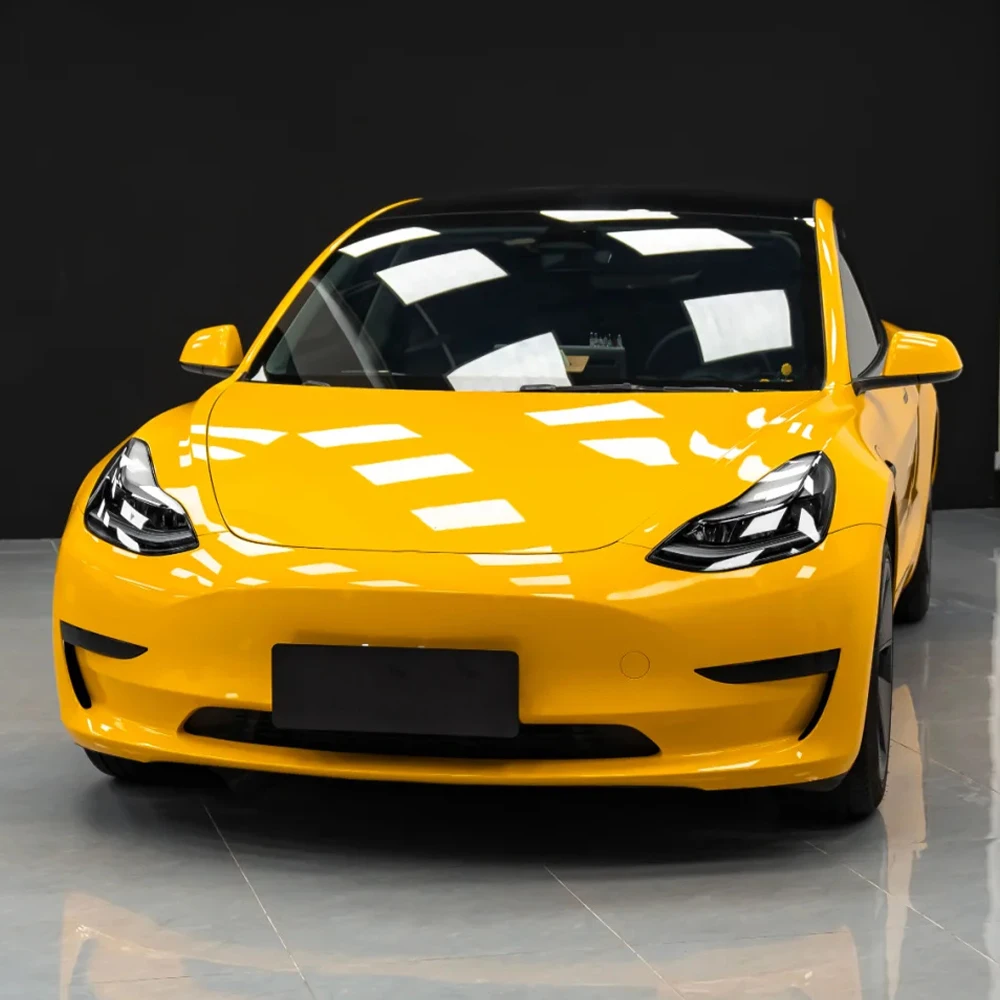
✅ Summary:
- Dry Application = Stronger bond, higher difficulty.
- Wet Application = Easier to handle, but water residue risk.
- Always check material, coating, adhesive, and UV stability before choosing TPU Color PPF.